
Allowing yourself to separate your roles from your identity
Let’s be honest, you know how to be who people need you to be.
You know when to insert the perfectly timed joke to diffuse the tension.
When to let the silence linger…and when to break it.
When to rescue someone from discomfort, and when to let them figure it out alone.
You’ve mastered reading the energy of the room. Knowing what everyone needs and when they need it.
Everyone loves this version of you. The version who takes care of everyone else, doesn’t need or ask for anything. The version that exists to make everyone else feel safe, comfortable, and happy.
Part of you loves this version also. The other part, wonders where you fit amongst everyone else’s needs and wants.

Is that version who you actually are, or is it simply the version you learned to become in order to stay connected to everyone else?
When Roles Become Identity
When we are known for what we do, it can be difficult to distinguish where the behavior stops and the identity begins.
You don’t just help people. You’re the helpful one.
You don’t just work hard. You’re the successful one.
You don’t just avoid conflict. You’re the easygoing one.
You don’t just take care of people. You’re the dependable one.
These didn’t connect to your identity accidentally.
Being responsible got you praised.
Being agreeable kept things peaceful.
Being successful earned you approval.
Being low-maintenance made connections last longer.
You learn what gets rewarded and what makes people happy. You learn what creates conflict and what prevents it. You learn which parts of yourself seem to be welcomed and which ones create friction.
The Roles Work Until They Don’t
Now, things have changed.
You grow older, your relationships change, your responsibilities change. You have more freedom and choice in your life.
Despite doing all the same things, something is starting to feel off.
The roles that once helped you succeed and feel connected are leaving you feeling disconnected and frustrated.
The strangest part? The roles aren’t necessarily bad, so on top of everything else, you’re questioning what’s wrong that you don’t want to be this person anymore.
The problem isn’t that you’ve become someone you don’t like or someone you don’t recognize.
The problem is that you’re beginning to realize you’ve only been allowed to see a part of yourself.
What happens if you stop playing the role?
When something becomes part of your identity, questioning the behavior can feel like questioning yourself.
And changing that behavior….well that feels like changing who you fundamentally are.
You finally say no to something you genuinely don’t have the capacity for. You know you made the right choice, and yet, you spend the rest of the day wondering if you were selfish.
Underneath it all, a harder question:
“If I’m not this person, who am I?”
Sometimes the hardest part of changing a pattern isn’t knowing that you want something different. It’s realizing that the pattern has become part of how you know yourself.
You Are More Than A Role
Defining yourself outside of your roles can be uncomfortable. Often because the role has become so intertwined with our identity that it’s difficult to tell where one ends and the other begins. Changing the pattern can feel like you have to change who you are.
That’s not the case at all.
You can still be caring without always being the one who takes care of everyone.
You can be responsible without needing to take everything on your plate.
You can be dependable without being available all of the time.
You can be successful without constantly needing to prove your worth through achievement.
The behaviors and qualities aren’t the problem. The problem is when they become automatic instead of optional.
When they’re automatic, they’re experienced as, “This is who I am. This is what I do. This is what people can count on me for.”
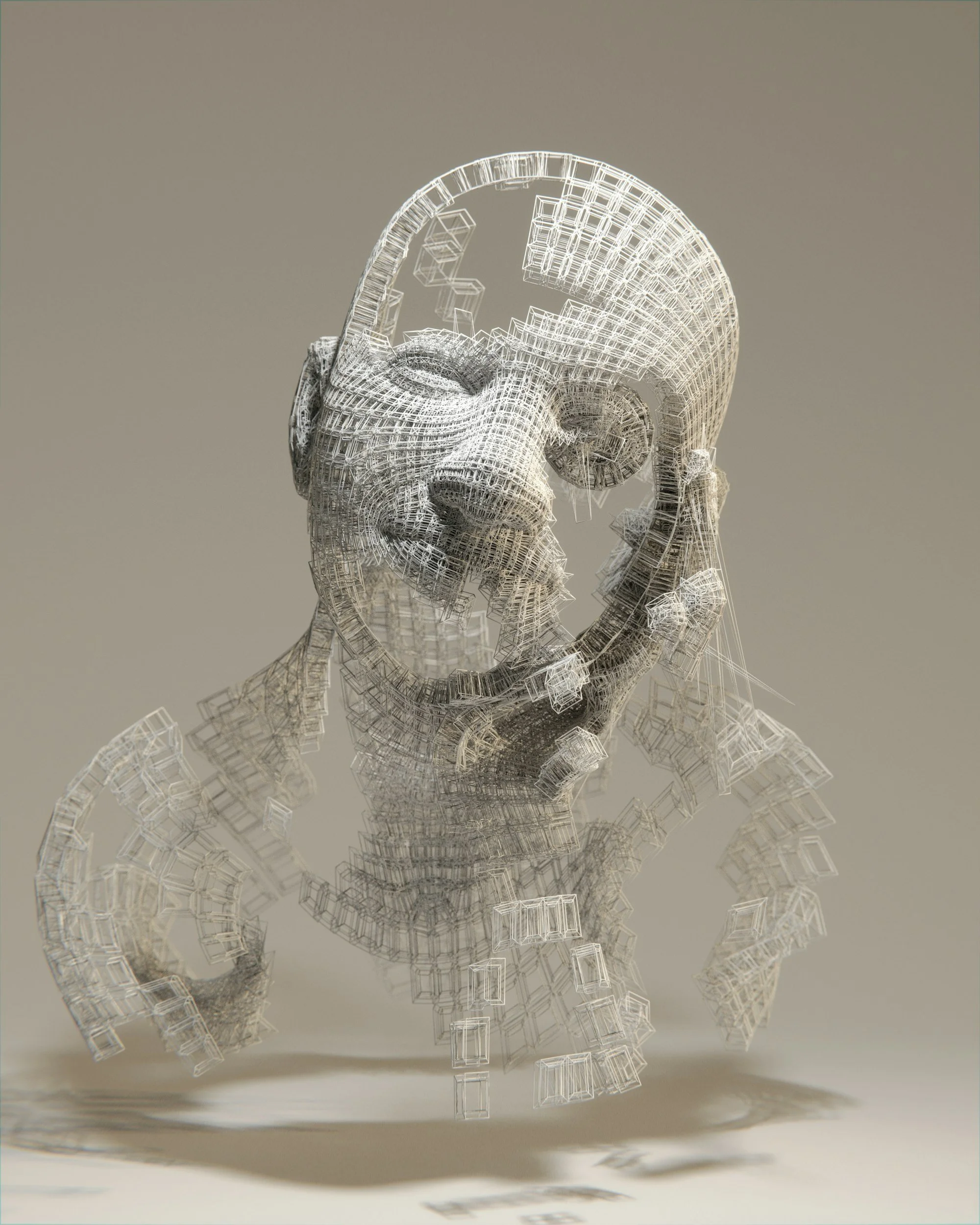
What if, instead of being essential pieces of your identity, they were simply behavioral choices?
When Choice Becomes Possible
Chances are, you’ve already asked that question and done some work on finding the answer. The struggle is it can be difficult to move from obligation to choice with only the support of self-help books, podcasts, or sheer motivation.
Therapy can offer something different from simply learning another strategy.
Instead of focusing only on what you’re doing, we discover why you’re doing it.
Where did you learn that being responsible meant taking care of everything?
What happens inside you when someone is disappointed with you?
What makes saying no feel so difficult, even when you know you want to?
What do you fear might happen if you stop being the person everyone can count on?
You can begin to understand the patterns beneath the behavior, the roles you've taken on, the beliefs you've developed, and the ways those patterns helped you navigate relationships and life.
Understanding the history gives you the opportunity to start asking a different question:
Do I actually want to do this, or have I learned that I have to?
That distinction is where choice begins.
You can still be caring without always being the caretaker.
You can still be responsible without being responsible for everyone.
You can still be successful without measuring your worth by what you accomplish.
You can still be dependable without being endlessly available.
The goal isn't to get rid of these parts of yourself or become someone completely different. Choice doesn’t mean choosing yourself every time. It means giving yourself permission to consider yourself in the decision.
The goal is to understand yourself well enough that these qualities become pieces of who you are, rather than your whole identity, and to learn to consider yourself in the decision, too.
That shifts them into choices rather than requirements.
You get to decide when they serve you, when they don't, and how you want to show up instead of an old pattern making the rules.
Taking Off The Mask
You’ve moved from asking, “Who am I if I stop being the person everyone needs me to be?”, to explore a different question: “Who could I become if I finally give myself permission to choose?”
You don’t have to stop being caring, responsible, successful, dependable, or generous. You certainly don’t have to become someone entirely different.
Taking off the mask doesn’t mean becoming someone new. It means realizing you were never only the person behind it.
You get to discover who you beyond the roles you’ve learned to play, and decide which parts still fit who you are today. You get to choose which qualities you want to engage in, when they serve you, and which ones you’re ready to leave behind.
That choice gives you the freedom to take off the mask, not because there was anything wrong with the roles you engaged in, but because you no longer need them to tell you who you are.
You get to show up as yourself, rather than as who you’ve learned you need to be.
Ready to start showing up for yourself, schedule a consultation here.